Creating a Healthier Commercial Environment Through High-Touch Area Cleaning
Maintaining a safe, sanitary workplace is a top priority for commercial facilities of all sizes. One of the most critical, yet sometimes overlooked, aspects of cleaning is thorough attention to high-touch surfaces. From door handles and elevator buttons to shared office equipment, these are the areas employees, visitors, and clients come into contact with multiple times a day. By focusing on a structured, recurring cleaning approach that prioritizes these heavily used spots, you can significantly reduce germs and foster a healthier environment.
In many commercial settings, especially those over 3,000 square feet, consistent cleaning practices can be a game-changer. Office managers and facility managers already face numerous challenges—preparing meeting rooms, managing building access, and ensuring a smooth day-to-day flow. In the midst of these responsibilities, high-touch surfaces can become hotspots for germ transfer if they aren’t cleaned thoughtfully and regularly. This comprehensive guide walks you through the essentials of high-touch area cleaning, technique, product selection, scheduling, and how to maintain a culture of cleanliness that keeps everyone safe.
Why High-Touch Cleaning Matters
High-touch areas, such as doorknobs, elevator panels, or countertop surfaces, are constantly exposed to various types of bacteria and viruses. In a busy workplace, each employee or visitor might unknowingly bring in germs that can linger on surfaces for hours—or even days. When those surfaces are touched repeatedly, harmful microbes can spread quickly from one person to the next. This is why a focus on high-touch area cleaning is essential. It directly tackles the surfaces where pathogens tend to accumulate and can drastically lower the risk of cross-contamination throughout your facility.
Moreover, focusing on these areas can immediately improve staff well-being. Employees who see that their workspace is consistently cleaned develop confidence in the company’s attention to health and safety. This can lead to fewer sick days, improved morale, and a general sense that their employer values their well-being. In high-traffic buildings that welcome clients or external visitors, a visibly clean environment reassures guests that they are entering a professional, safe setting.
Identifying Key High-Touch Surfaces
In any commercial or office setting, there are common locations where high-touch cleaning is critical. These include:
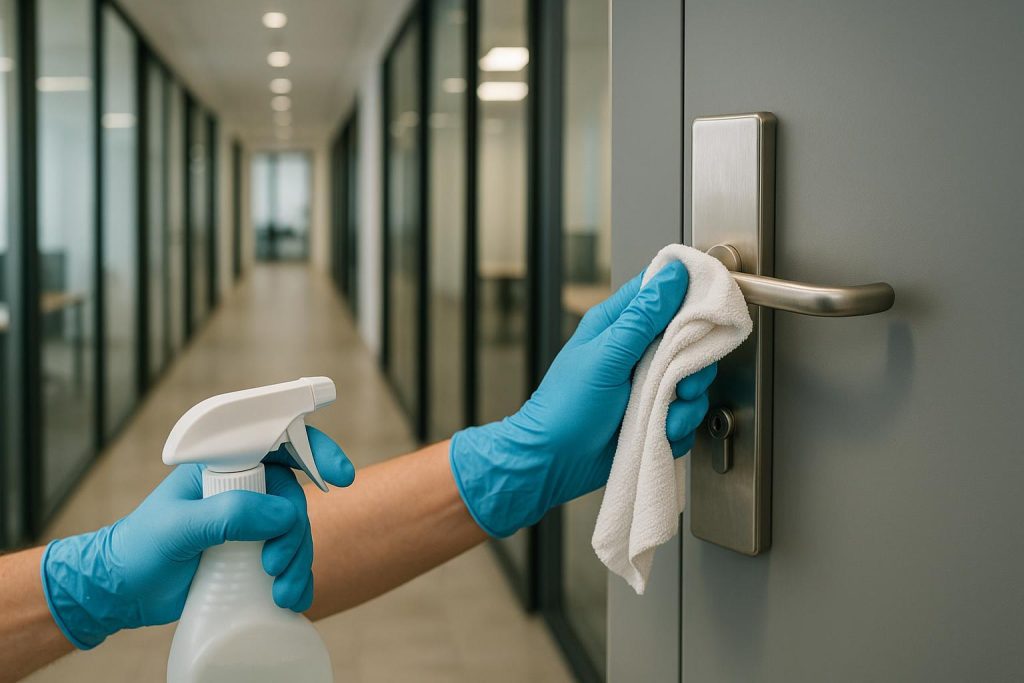
- Door Handles and Push Plates: Every door handle in your facility is used countless times a day. Special care should be taken for entrances, break rooms, conference rooms, and restroom doors.
- Light Switches: These are often ignored because they blend into walls. However, employees toggle them on and off frequently, making them prime targets for germs.
- Reception Counters and Front Desks: Anyone entering your facility—staff, visitors, or delivery personnel—may rest items here, lean against the countertop, or hand over paperwork.
- Conference Room Tables and Chairs: Meeting spaces are collaborative hotspots. People inevitably place phones, coffee cups, and laptops on the tables, transferring germs onto shared surfaces.
- Elevator Buttons: The constant pressing of these buttons by multiple people throughout the day easily spreads bacteria.
- Shared Office Equipment: Printers, scanners, copiers, and vending machines are touched by various employees around the clock. Consider providing wipes for quick sanitization after each use.
- Faucet Handles and Dispensers: In restrooms and kitchens, faucets, soap dispensers, and paper towel levers see continual usage. Improper cleaning can quickly lead to a buildup of microbes.
Each facility is unique, so it helps to create a customized checklist. Walk through your environment and note everything people are likely to touch daily. This exercise often reveals other surfaces—such as drawer pulls, phone handsets, or refrigerator door handles—that equally demand attention.
Choosing Effective Cleaning Products and Tools
An integral part of your high-touch area cleaning strategy involves selecting the right disinfectants, wipes, and cloths. Many commercial settings opt for medical-grade or industry-approved solutions that target a wide spectrum of pathogens. When comparing products, look for ones that specify which bacteria and viruses they neutralize. This ensures you’re aligning your cleaning agents with your facility’s needs.
Color-coded cleaning tools offer another layer of protection. For example, you might use red microfiber cloths or single-use wipes specifically for restrooms, and green cloths for general office surfaces. Having distinct colors helps the cleaning team avoid unintentionally transferring germs from restrooms to workspaces. Make sure your employees and cleaning staff understand the importance of disposing of or laundering cloths correctly and washing their hands between tasks. These simple steps can go a long way in minimizing cross-contamination.
The Significance of a Structured Schedule
Consistency is key to an effective high-touch cleaning plan. In many offices, high-touch areas require multiple wipe-downs throughout the day, not just a once-daily routine. Think of how many times a break room door handle or a conference room table is used from morning to late afternoon. By implementing a recurring schedule—whether every few hours or at least in the morning, midday, and evening—you help ensure germs have less time to multiply. This approach is particularly vital in workplaces that accommodate visitors, or in busier facilities that exceed 3,000 square feet.
Organized commercial cleaning providers usually integrate these tasks into a comprehensive program. For instance, they’ll map out the exact times for trash removal, floor cleaning, and high-touch surface disinfection. Coordinating these duties keeps your facility continuously refreshed without causing workflow interruptions. If you manage a large office with multiple departments, you might schedule a midday cleaning round to address meeting rooms and lunch areas. For 24/7 facilities, planning additional cleaning during shift changes can be especially helpful, as it prevents the accumulation of germs during busy transition periods.
Creating a Culture of Cleanliness Among Staff
Even the best cleaning crew can’t be everywhere at once, which is why employees can be valuable partners in maintaining sanitized high-touch areas. Encourage your team to use sanitizing wipes or sprays on shared equipment, desk surfaces, or break room appliances after use. A quick wipe goes a long way in preventing germs from lingering until the next scheduled cleaning.
Signage around the office, whether near printers or coffee stations, can serve as a gentle reminder. For instance, a simple sign reading, “Help keep our break room clean—wipe down surfaces after each use,” fosters a sense of shared responsibility. During staff meetings, you can briefly revisit these expectations, highlight the benefits of a clean workplace, and reinforce that everyone plays a role in overall sanitation. When employees feel they are actively participating, there’s a stronger collective buy-in to keep the environment safe.
Preventing Cross-Contamination
Cross-contamination occurs when germs migrate from one place to another, often due to improper cleaning methods or the reuse of contaminated cleaning tools. By training your in-house crew or commercial cleaning partner thoroughly, you can minimize this risk. Consider these strategies:
- Separate Cloths for Different Zones: Assign specific cloths or wipes for restrooms, kitchens, and office areas. Clearly label each set so that the cloth used for a toilet handle never touches a boardroom table.
- Frequent Tool Changes: If you’re using disposable wipes, ensure they’re thrown away after a single application or after a small section of cleaning. For reusable cloths, have a laundry system that’s easily accessible in your facility.
- Hand Hygiene: Cleaning staff should wash their hands thoroughly or use sanitizer between tasks, especially after handling restroom surfaces.
Ensuring these procedures become routine can significantly reduce the chance of cross-contamination, keeping high-touch areas and the broader facility safer for everyone.
Leveraging a COR-Based Safety Framework
In commercial environments, especially larger ones, a focus on safety practices goes beyond simply wearing gloves. A safety-forward mindset might include the use of a COR-based safety manual to guide chemical handling, disposal protocols, and the proper posting of signage (for instance, warning people when surfaces are wet). This approach ensures cleaning practices don’t just eliminate germs; they also prevent accidents like slips, trips, and handling mishaps.
When a professional cleaning team operates with a documented safety plan, it underscores their commitment to protecting everyone on the premises. Employees can continue their tasks without worrying about unsafe fumigation or lingering chemical residues. Clients and visitors, likewise, see an organization that prioritizes both cleanliness and injury prevention. This cultivated sense of professionalism can strengthen a company’s reputation and build trust with staff and clientele.
Quality Assurance Measures
A structured schedule and well-developed checklist are only effective if you verify they’re followed consistently. Quality assurance steps might include supervisory spot checks, digital logs that track completed tasks, or physical sign-off sheets posted in common locations. Clear documentation helps teams identify any oversights and take corrective action promptly.
In some workplaces, managers conduct quick walk-throughs after each cleaning round to confirm that key areas—like door handles and faucet fixtures—are thoroughly sanitized. Others rely on software that employees use to acknowledge tasks in real time. Whichever method you choose, routine monitoring encourages accountability and reveals patterns over time. If a particular area frequently gets missed, you can address the root cause and prevent recurring issues.
The Role of Professional Partners
While an in-house approach can be effective, some facilities benefit from teaming up with an experienced commercial cleaning provider. Businesses with high foot traffic, multiple floors, or extensive meeting areas often find that recurring, scheduled services reduce the burden on internal staff and ensure a consistently clean environment. This is particularly helpful for offices with more than 3,000 square feet of workspace.
A professional cleaning team typically brings ample experience in identifying high-touch surfaces, selecting appropriate products, and adhering to a structured schedule. They also employ advanced systems—like color-coded cloths, detailed checklists, or specialized software—to streamline tasks. If you’re looking for a more robust approach, you can explore Commercial Cleaning Services tailored to large-scale or medium-sized facilities. The right partner will create a plan that integrates seamlessly with your building’s operations while emphasizing consistency and a safety-forward mindset.
Fostering Employee Engagement
Sustaining a spotless environment doesn’t fall solely on your cleaning partner. Encourage ongoing dialogue with your staff about the importance of sanitizing high-touch surfaces. This could involve introducing a “clean as you go” policy in kitchens and restrooms, or occasionally reminding everyone to wipe down shared equipment after use. Many successful facilities incorporate these reminders into routine communications, ensuring sanitation is top-of-mind for all employees.
You can also designate certain employees as “cleanliness champions” or points of contact who communicate with both facility managers and cleaning staff about emerging concerns. This keeps lines of communication open and ensures any issues with high-touch surfaces are quickly reported and addressed. When employees see the direct impact a clean environment has on their day-to-day comfort, they’re motivated to do their part.
Adapting to Changes in Your Workplace
As businesses grow or shift, their cleaning routines may need to expand or adjust. For instance, if you add new meeting rooms, install interactive screens for visitors, or move to a new floor layout, you’ll need to update your high-touch surface checklist. Adding or removing furniture can also change how people navigate the space, revealing new areas that often get touched and must be sanitized.
Frequent communication with your cleaning provider ensures that any layout changes or increased foot traffic are factored into the cleaning schedule. A forward-thinking approach also includes planning for busier times like flu season, new employee onboarding cycles, or special events. When your high-touch cleaning routine remains agile, you minimize the risk of emerging hotspots for germ transfer. Remember that workplaces are dynamic; a relevant cleaning strategy should be, too.
Smart Ways to Avoid Oversights
Small oversights can add up quickly if left unchecked. For example, forgetting to wipe the break room refrigerator handle repeatedly could turn it into a germ magnet over time. The key is to prevent these minor misses from becoming systemic gaps in your cleaning strategy. Having a concise yet thorough list of tasks, paired with routine checks, can help maintain a standard of quality that keeps employees healthy.
Set clear, measurable goals to benchmark success. This could be as simple as verifying that each high-touch surface in a list of 10 areas is sanitized at least three times per day. When these goals are documented and shared, your team knows what to aim for—and how often to do it. Using a combination of digital tracking tools and traditional checklists can ensure that nothing slips through the cracks.
When to Seek Expert Assistance
If your facility is bustling and you struggle to manage cleaning schedules on your own, consider bringing in professionals who focus exclusively on commercial cleaning. Their expertise in scheduling, product selection, and safety protocols can relieve internal staff of extra duties. For instance, a professional team might implement a multi-round cleaning plan each day, targeting entrances, conference areas, restrooms, and kitchens at key intervals to minimize germ spread.
Many commercial environments also have to comply with local health and safety standards, which can be easier when working with someone who already follows COR-based safety manuals. Such processes are designed to align with industry requirements, ensuring that employees, visitors, and cleaning staff adhere to guidelines that promote overall well-being. If you’d like to know more about how cleaning services can integrate into your own facility’s operations, you’re welcome to Contact Us to discuss structured cleaning solutions.
Long-Term Benefits of a Strong High-Touch Cleaning Routine
Investing in a robust cleaning routine for high-touch surfaces has both immediate and long-term rewards. Right away, you reduce the likelihood of critical illnesses spreading throughout your workforce. Over time, you also demonstrate to staff, clients, and any external visitors that your organization values health and safety as a cornerstone of operational effectiveness. Even subtle improvements like fewer sick days or more streamlined collaboration in meeting rooms can bolster productivity.
Another key advantage is cost savings. Preventing small issues from escalating can spare you the expense of large-scale decontamination or the fallout from a serious infection outbreak. For instance, a thorough approach to high-touch disinfection might eliminate the risk of having to close your office temporarily. Ultimately, a clean workspace conveys professionalism, helps protect your reputation, and keeps your site functioning smoothly.
Building a Future-Focused System
Always remember that high-touch cleaning strategies should evolve alongside your business. As office layouts change, new technologies are deployed, or employee headcounts shift, your cleaning approach must adapt. Make it a point to regularly revisit your cleaning checklist, collaborate with your commercial cleaning partner, and refine your schedule based on usage patterns. By treating cleanliness as an ongoing project rather than a one-time task, you ensure your facility remains welcoming, healthy, and aligned with industry best practices.
In the long run, a well-planned approach saves you from last-minute scrambles to contain spreading germs, freeing you to concentrate on other aspects of running a successful enterprise. You’ll also find that a workforce that recognizes and appreciates a clean, hazard-free environment is more engaged, less prone to illnesses, and likely to stick around longer. By investing in a culture of cleanliness now, you position your organization for growth, stability, and a positive reputation in the commercial sector.
Whether you choose to handle these tasks internally or enlist a professional cleaning service, maintaining high-touch areas is an indispensable part of keeping your commercial facility both healthy and productive. Structured schedules, effective disinfectant choices, COR-based safety practices, and staff engagement all work together to bring about a clean environment that fosters confidence and well-being. With a dedicated high-touch cleaning routine, you’ll be better equipped to safeguard your employees, welcome clients, and reflect the professionalism your organization strives for every day.